Electron has a few different ways to embed web content safely into an existing window. The standard technique is to use a regular iframe, but this doesn’t give you all the power you might need over user content; notably, you don’t get full control over the will-navigate event for user navigation.
The documentation notes that you can use WebViews or regular BrowserWindows. WebViews have the distinct advantage that they appear in the regular DOM, and hence are flowed as part of the document’s content. They’re also underdocumented and not entirely recommended, but they’re the best balance between an iframe and a BrowserWindow that Electron offers right now.
For my particular use case, I want to render user content with the following key requirements:
User content is supplied as a string of HTML.
User content should be restricted as much as possible. Notably, no user-supplied JavaScript should be run.
Navigation events must be caught and sent to the system; i.e. clicking a link in user content should open the system browser.
User content should be seamlessly displayed as part of the parent layout flow, without additional scrolling.
The solution I settled on for this was a webview with JavaScript disabled, encoding the content into a data URL:
However, the fourth item is where it gets tricky. We need to detect the inherent size of the user content, and then change the height of the webview to match this. In a traditional iframe setting, something like iframe-resizer could be used, but we’ve disabled JavaScript. Additionally, we can’t access the contentDocument of the iframe (OOP iframes are always treated as cross-origin iframes, and there’s a shadow root involved too).
The naïve approach is to try using webview.executeJavaScript() directly, however this will give errors from Chrome, as we’ve just told it to disable JavaScript. Makes sense, but also annoying.
Preload scripts do run though. After experimentation with this however, it appears that messaging doesn’t fully work, and DOM events don’t persist after preloading. This means it’s functionally useless for this purpose.
After a tonne of experimentation, it turns out that using contents.executeJavaScriptInIsolatedWorld() works, provided you supply a non-zero world ID. This also has access to the DOM. While you can’t use IPC or messaging from this world, your script can return a value. So, to get the inherent size of the user content, we can run the following in the main process:
app.on( 'web-contents-created', function ( event, contents ) {
    // Calculate height in an isolated world.
    contents.executeJavaScriptInIsolatedWorld( 240, [
        {
            code: 'document.documentElement.scrollHeight',
        }
    ] ).then( function ( height ) {
        // We now have the height.
    } );
} );
As a slight wrinkle to this, you cannot access this from the renderer, only from the main process. Thankfully, you can access the webcontents ID from the renderer, so you can use IPC to link these two together:
// In main:
win.webContents.send( 'webview-height', {
    id: contents.id,
    height,
} );

// In renderer:
ipcRenderer.on( 'webview-height', function ( e, data ) {
    if ( data.id === webview.id ) {
        webview.style.height = data.height;
    }
} );
Your code in practice will likely need to be more complex than this to properly handle timing; you could also use ipcRenderer.invoke with webContents.fromId() to drive this from the renderer instead.
In the spirit of Dan Abramov’s Overreacted blog, where he deep-dives into React on his personal blog, I thought I’d do the same for WordPress. If there’s something you’d like to see, let me know!
Since WordPress 1.0, WordPress has supported “pretty permalinks”; that is, human-readable permalinks. This system is built for a lot of flexibility, and allows users to customise the format to their liking, using “rewrite tags”.
Pretty permalinks is implemented through the Rewrite system, but how that works can be a bit obscure, even if you’re familiar with it.
“Rewrites”, for those who aren’t familiar, are how WordPress maps a pretty permalink to something it can use internally. This internal representation is called a “query” (which is a bit of an overloaded term), and is eventually used to build a MySQL query which fetches the requested posts from the database.
This “query” is not exactly the same as what you might think of as a query in WordPress. It’s a mix of parameters used in WP_Query to get posts (called “query arguments” or “query args”) as well as information about the request itself (called “query variables” or “query vars”). Query vars are typically only useful for the main query, and include routing information like whether a 404 error occurred. This will hopefully be clearer later.
Let’s step through, chronologically, how WordPress handles turns your request into this query.
Aside: WP_Rewrite?
If you’re a seasoned WordPress developer, you might know Rewrites through the WP_Rewrite class. But perhaps surprisingly (or not, if you know how WordPress has evolved), rewrites are actually handled in the little-known WP class instead. Additionally, some (in fact, many) URLs and patterns are routed outside of regular rewrites.
We’re going to take a look at the whole process from where it starts, not just WP_Rewrite. The rewrite process really begins as soon as WordPress starts handling the request.
Bootstrapping
Before WordPress can get started with anything, it needs to first bootstrap everything. How this general process works is a topic for a different day, so I’ll just talk about the relevant bits here.
Already during the bootstrap process, there are a few places where redirects or full requests can be served back. The most common case with full-page caching enabled is that the cache will serve back a request using its own routing. The other cases are mostly error cases, with the exception of multisite, which I’ll cover later.
Note that all of these cases happen before the Rewrite system is started, so it’s not possible to use rewrites to handle favicons, multisite routing, or caching. This is all by design, as these checks have to run early either for performance or to check for basic bootstrapping errors.
You can however use the various hooks provided in the bootstrapping process to handle these requests, if you register your callbacks before wp-settings.php is loaded. You can also handle it in your wp-config.php; don’t forget that’s just PHP, so you can run whatever code you want there.
Initialising the Routing
After the basic bootstrapping in WordPress is done, we get into the actual routing instantiation. Firstly, WordPress instantiates the critical routing classes (WP_Rewrite and WP).
Instantiating WP_Rewrite fires off rewrite initialisation. This loads in all the various settings and sets properties that can later be used for rewrite generation. This also includes setting the “verbose page rules” flag, which is used when your permalink structure contains one of a few specific tags: those which start with slugs, and would potentially cause pages and posts to have conflicting permalinks. Verbose rules change how routing happens later, causing WordPress to “double-check” the URL during routing.
Before WordPress 3.3 (specifically, #16687), verbose page rules caused one-rule-per-page to be generated, which (needless to say) wasn’t great for performance on large sites. This was changed to instead check only when necessary.
Once this done, our oft-forgotten friend wp-blog-header.phpkicks off the actual routing. This runs WP::parse_request which is where the actual routing in WordPress is (generally) done. Basically the first thing this does is to load in the “rewrite rules”.
Generating the Rules
Before we can start doing any routing, we need to convert the user settings to something we can actually work with. Specifically, we need to generate the rewrite rules.
Rewrite rules are essentially a gigantic map of regular expression to “query”. For example, the basic rule for categories looks like:
If you’ve ever used any other routing in pretty much any web framework, you might wonder what the hell the thing on the right is. This is a WordPress “query string” (which is not the same thing as WP_Query). Essentially, all “pretty” permalinks in WordPress map to this intermediate “ugly” form first, before then being mapped into a WordPress query. This ensures compatibility with sites that don’t support pretty permalinks, but means that WordPress doesn’t directly support “rich” routing (such as callbacks, complex queries, etc).
To generate these rules, we go back to the WP_Rewrite class, which attempts to load cached rewrites from the rewrite_rules option, and generates it if it is not available.
Building a Set of Rules
There are many sets of rewrite rules that are generated, and each is generated from a “permastruct” (for “permalink structure”) and an “endpoint mask”. The permastruct specifies the general format of the set of rules to generate, and the “endpoint mask” controls which suffixes (“endpoints”) are added to the permastruct.
A permastruct is a string with static parts and “rewrite tags”. Rewrite tags look like %post_id% and represent a dynamic part of the rewrite rule. WordPress contains a few built-in permastructs: “date”, “year”, and “month” for date archives; “category”, and “tag” for the built-in terms, “author” for author archives; “search” for search results pages; “page” for static pages, “feed” and “comment feed” for RSS/Atom feeds. It also has the main permastruct for single post pages, and “extra” permastructs as registered by plugins or themes.
The permastruct is combined with an endpoint mask, which is a bitmask specifying which additional rules to add to the main endpoint. WordPress includes 13 endpoint masks, plus 3 helper masks (EP_NONE, EP_ALL, and EP_ALL_ARCHIVES). These can be combined with bitwise operators (|, &, ~) to activate multiple endpoint masks at once.
Endpoint masks are very confusing for those unfamiliar with bitwise operations, so you typically don’t see them used much outside of WordPress core’s routes. Also, they’re not very extensible, as custom endpoint masks will conflict with each other. Avoid doing anything special with these, and generally follow existing guides on how to use them. Jon Cave’s post on Make/Plugins is the best way to understand them if you really want to get into it.
The permastruct and endpoint mask are passed to WP_Rewrite::generate_rewrite_rules(), which replaces the rewrite tags with their regular expression equivalents. It does additional parsing to then generate additional rules based on which rewrite tags were used, and using the endpoint mask. I won’t go into the specifics of this, as this is optimised code with lots of weirdness, but suffice to say it converts the parameters into an array of rules.
For example, the main post rewrite rules are generated using the user-set permastruct with the EP_PERMALINK endpoint mask. This takes the rewrite_rules setting as the permastruct (which looks like /%post_id%/%postname%/). generate_rewrite_rules() turns this into rewrite rules to match things like post attachments, feeds, pages (as in, paged posts), comment pages, embeds, and the combination of all of these.
Collecting all the Sets
WordPress repeats the rewrite generation for each set of permastructs it knows about (plus the “extra” permastructs added by plugins or themes), and it then combines them into a single set of rules. It also adds in some additional static rules (for things like deprecated feeds and robots.txt). It runs a couple of filters to allow plugins and themes to add other static rules as well.
Extra permastructs are typically generated by core helpers like register_post_type() or register_taxonomy(). Plugins don’t typically add permastructs manually, as the generation makes a lot of assumptions about things you want.
Once all of this is done, WordPress saves the rules into the rewrite_rule option to avoid having to regenerate them on the next request. However, if a plugin has flushed the write rules before wp_loaded, this saving is deferred to wp_loaded to ensure plugins don’t break the whole system.
Now that we know we have rewrite rules (whether loaded from the option or generated fresh), we can finally get around to routing our requests.
Root requests (i.e. for /) are normalised to the empty string (''), and matched directly to the '$' rule, which improves performance for one of the most commonly-requested pages on the site. (As '$' is also (typically) the last rule in the rewrite array, this also saves us running potentially hundreds of regular expression checks that will never match.)
All other requests go into the main matching loop. This loop takes every rewrite rule and attempts to match the regular expression against the requested path (twice, in case the URL needs decoding). If the rewrite rule matches, the “query” for the rule is stored, and the loop breaks (as only one rule can match). If no matches are found, $wp->matched_rule remains unset.
If verbose page rules are set and the “query” contains the pagename query var, the loop first checks to see if the URL actually matches a real post. (It also checks that the post is public to ensure drafts aren’t accidentally exposed via their URL.) This check allows multiple post types to have overlapping rewrite rules, and means that potentially multiple rules can match a single request.
If a match is found, WordPress then parses the URL using the “query” string from the rule. This transforms a URL like /42/my-post/ into an array of query vars like [ 'p' => 42, 'name' => 'my-post' ]. This transformation is done using regular expressions which understand how to turn $matches[1] into the first item of the rule’s regular expression result.
WordPress also checks if the current request is for wp-admin/ or for a direct PHP file, and resets the query vars if so.
At this point, we’ve converted the requested URL into query vars, so the main part of the routing is done. All that’s left is to check that the query vars are allowed to be used, combine in $_GET (query string) and $_POST (data from the request body) variables, and apply some light sanitisation. Further permission checks and cleanup is also done to ensure everything is fairly normal. If any errors occurred, the error query var is also set to enable it to be handled later.
The specifics of how querying and rendering the results are done is out of scope for this explanation, but has been explained to death elsewhere, as you’ll actually need to interact with this in plugins and themes.
Special Cases
Multisite
While rewrite rules handle matching requests inside a site, a different system is using for matching requests to sites first. This is for a few different reasons: rewrite rules can be changed by plugins, which are site-specific; site data needs to be loaded first for rewrite settings; and multisite routing uses both the domain and the path.
Multisite routing is kicked off when ms-settings.php is loaded in wp-settings.php. The routing first loads sunrise.php, which traditionally handled “domain mapping”; that is, routing external domains to sites. WordPress 3.9 enabled doing this internally in WordPress by simply setting the site’s URL to the external domain, but plugins are still required for multiple domains. (The sunrise file can also be used for many other purposes, but routing remains one of its main purposes.)
If the sunrise process did not handle the routing, WordPress normalises the host and path, then uses this information (along with the SUBDOMAIN_INSTALL flag) to try and find the current site. The mechanisms by which it does this are fairly readable, so I’ll leave it as an exercise to the reader to look into this: simply read and follow the source of ms_load_current_site_and_network().
Once the site has been routed, the site’s details are loaded into relevant global variables. This includes the site’s URL (home_url()), which is later stripped during normalisation in WP::parse_request() (see “Matching the Rules”). This ensures that any path for the multisite install is not used when matching rewrite rules.
REST API
The REST API uses its own routing and endpoints for a few reasons. Unlike regular WordPress requests, the REST API does not always generate a “main” query, so it does not need the query var mapping system. Additionally, REST API “endpoints” (no relation to “endpoint masks”) are matched using both the HTTP method (typically GET, POST, PUT, or DELETE) and the path, unlike regular WordPress rewrites, which are method-agnostic.
The routing inside the REST API is much more similar to traditional routing in non-WordPress contexts, and it matches the pair of HTTP method and path to a callback rather than a query.
To bootstrap the process, the REST API registers rewrite rules which match /wp-json/(.*) to a custom query var called rest_route. After the rewrite system has matched the request URL to this rewrite rule (on parse_request), the REST API checks this query var. If it’s set, it initialises WP_REST_Server, and handles the routing inside WP_REST_Server::serve_request().
If it matches, the callback is then called, with some other stuff around it. Exactly how these requests work is a topic for a different post, as the API does a lot of special handling around this.
The design of Rewrites is classic WordPress: it maintains wide compatibility, both forward and backward, through clever and careful design. There’s much to like about this system, but the core feature of mapping “pretty” permalinks back to “ugly” permalinks is very smart. This makes compatibility between the two inherent, and it ensures new code is automatically compatible.
The biggest problem is that Rewrites is inherently tied to post querying. To be clear, this is not a problem with Rewrites, but rather with the overall design of the frontend system in WordPress. This makes routes not tied to posts much more difficult to design and implement. While this worked well for the original, blog-focussed nature of WordPress (where essentially everything was simply a filtered post archive), it has been stretched to its limits as a modern CMS.
This is evident in the REST API, where posts are no longer the main content type, and anything (users, themes, the current theme) in WordPress is addressable via a URL. When I designed the REST API’s routing, it was with these limitations in mind, which is why it uses a completely custom router. This router also works by “skipping” the main query, which it actually does by exiting before queries and templates are loaded. This is workable for a separated system like the API, but isn’t a good idea if you want to instead design user-facing pages which actually use templates (say, for a checkout page).
Understanding Rewrites can also be tough if you don’t know where to start, which is why a lot of people miss key parts or don’t quite understand the flow. A significant part of this is the organic way in which the WP and WP_Rewrite classes have grown, which means that understanding the flow requires a lot of flicking back and forth. I’d wager that quite a lot of WordPress developers don’t even know the WP class exists and acts as the main engine of the request; I didn’t until I really dug into Rewrites while working on core.
So Much More
There’s a lot more that happens that I didn’t cover here, so let me know if you want to see any more detail on anything specific. Just knowing where to start can be challenging some times, particularly with these systems that have organically grown.
Also, if there’s anything else you’d like to see a breakdown of, let me know! I’d like to demystify more of WordPress if you found this useful.
As we approach the State of the Word 2017 at WordCamp US, I think this is a good time to look back on the state of the REST API project and core focus over the last year.
2017 has been an interesting year for the REST API with highs and lows, and periods of intense development and slowdowns.
4.7
Immediately after WordCamp US 2016, WordPress 4.7 was released, which merged the second stage (endpoints) of the REST API. This was a major milestone for the REST API, and marked the culmination of our efforts over the previous 4 years.
In the months after 4.7’s release, we followed up by fixing bugs in the REST API, including two security bugs. One of these security bugs was a very serious privilege escalation issue, which was unfortunately caused by an unrelated low-level change in WordPress that the API hadn’t guarded against. A huge thanks to Securi, the security team, and to the hosts for working hard on mitigating, fixing, and deploying this issue. As the first large security release involving the API team, there was definitely much for us to learn, and we definitely learnt much.
With 4.7 representing a major culmination of the API team effort, most of the “core” REST API team (myself, Daniel, Rachel, and Joe) who lead the project pre-merge ramped down contribution. After years of intense effort on the project, we simply needed a break. As is the nature of open source projects, contribution is voluntary, and a massive thanks has to go to everyone involved for such a long time, especially to my co-lead Rachel. Thanks also to those who picked up the baton on the core work, including (but not limited to) Adam Silverstein, James Nylen, and K. Adam White.
The API has continued to improve in an iterative way throughout the year, with bug fixes and improvements from many members of the community. These have helped the API become more refined, stable, and most importantly, useful.
Core Focus
Organisationally, as we shifted from an independent feature project to part of core, the API also transitioned from a project to a “core focus”. This is a new concept and structure in WordPress, representing a large shift from the previous, release-driven product cycles.
With this change, our official goal was set as “getting first party wp-admin usage of the new endpoints, and hopefully [replacing] all of the core places where we still use admin-ajax”. Progress towards this goal throughout the year has been slow.
Part of the reason for this slowness has been a major drop in contribution. With our shift from GitHub to Trac, the number of drive-by contributions has fallen, with contributions coming more from regular core contributors. Additionally, with most of the core API team taking a break and moving on, the organisational and regular contribution has dropped massively. The combination of this drop in contribution to the API along with the ramp up in contribution on other focuses (Gutenberg in particular) means we are by far and away the slowest moving core focus, which has the flow-on effect of making us less attractive to contribution.
The scope of our official goal is also massive. As WordPress has grown organically from a static HTML admin to a more interactive interface, admin-ajax endpoints have grown likewise, with specialised endpoints added as and when needed. Our audit of the actions in WordPress showed 92 separate endpoints across 14 different categories, spanning every section of the admin. The organic growth of these has meant that a lot of the frontend code is tied specifically to the admin-ajax response, and vice versa, including passing generated HTML. In the process of investigating with these endpoints, experimentation showed that switching to use the API would essentially require rewriting the feature in order to use it.
Fundamentally, I think the core focus’ goal is at odds with the strengths of the REST API team. Our focus should be providing support to other teams (like the Gutenberg, Customiser, and mobile teams) and empowering developers to build on the API, rather than rewriting parts of the admin. The goal of switching the admin to the REST API is valuable, but it should be part of efforts to improve the user experience, rather than simply refactoring (especially when refactoring would needlessly break existing plugin functionality).
However, progress towards the goal across the entirety of WordPress has been good. One of the largest areas of admin-ajax usage is in the edit screen, where many of the admin-ajax endpoints will be replaced entirely through Gutenberg’s use of the REST API. Likewise, the Media endpoints will likely become legacy as the media library changes for use with Gutenberg. A significant portion of the endpoints are around themes, which are covered by the Customiser team’s efforts. The accessibility team is in the process of reworking the settings pages, which as a side-effect, will allow us to remove the settings endpoints; the Live Settings experiment also shows that we have the ability to improve the user experience here as well. All of these efforts move away from admin-ajax while also improving the user experience.
Moving forward into 2018, the REST API team needs to shift focus to the issues with the API, and focus on helping other teams do what they do best.
Our Big Issues
There are three big issues which the REST API should be focussed on to move forward: authentication, functionality, and empowerment.
Authentication
I’ve talked about authentication endlessly, and will keep talking about it until we solve it, because it is one of the largest problems we still have. Without a viable external authentication solution, over a third of the code in the REST API isn’t usable outside of the site. Imagine if Stripe’s API didn’t let you charge new credit cards, or if Twitter’s mobile apps only let you read tweets but not reply. This is the situation facing API users right now, and is the biggest reason the WordPress mobile app is not powered by the REST API.
Discussions at the Contributor Summit this year with the mobile team were fruitful, and we have a practical plan forward for rolling out select support for the official mobile apps while we work on rolling out general solutions. (As well as potentially enhancing the user experience significantly with things like magic login links.)
Efforts at the WordCamp Europe contributor day provided a massive push forward on OAuth 2 support, with the plugin now beginning to stabilise. A further focus here will allow us to build up the crucial momentum for development, and work with client developers.
OAuth 2 also provides a much cleaner way forward to solving the distributed API problems than our previous solutions. In the coming weeks, we’ll publish the first alpha versions of this new solution, which stays true to the original design goals of the first version of the broker while improving upon it in every way.
Functionality
With the push for merging the REST API, the nature of deadlines meant we had to push many features from the API to double-down on our core functionality. However, this means that the REST API is incomplete. In particular, we’re missing support for key objects in WordPress, including menus, widgets, plugins, and themes. We’re also missing some crucial functionality around existing objects, like post previewing. This means that while it’s possible to build apps on top of the API, some of the core functionality users expect is missing from those apps.
This has flow-on effects to the other core focuses. Incomplete support for drafts in the API has caused problems in Gutenberg, and the lack of support for appearance functionality causes the burden to shift on to the Customiser team. These fall squarely within our responsibility, and we’re currently letting them down.
Empowerment
The core of what the REST API does is empower developers to build things better and faster. To empower developers, we need to take the time to improve our documentation and provide better tooling. We have two fantastic API client libraries in the Backbone and Node libraries, and we should continue to push these forward while also helping to develop the client library ecosystem.
Key to this is ensuring that we are where our users are. Our previous contribution process on GitHub allowed us to benefit from drive-by contributions from developers using the API, and the momentum of Gutenberg on GitHub likewise shows the power of being where developers are. We recently migrated the developer reference to GitHub, and we need to look at further ways to embrace the external developer community here.
Additionally, we need to engage in more outreach with our users. While the user experience side of WordPress engages in user testing and outreach, there’s no equivalent for the REST API. We should be getting more client developers involved in the process, including the mobile team and developers of significant apps like Calypso and MarsEdit.
Our Future
While 2017 has been a tough year for the API, as we move into 2018, I think the state of the REST API is strong. We have the skills and the vision to push the API forward with our focuses, and empower other developers, whether inside the core development community or external.
But in order to enact these changes, make progress, and rebuild a strong contributor base, we need to make the fundamental changes to our organisation and goals to push forward.
We need to embrace our strengths and focus on the areas of highest impact. We need to listen to and work with our users on improving their experience and fixing their problems. And most importantly, we need to get more users by making the REST API more useful to more people.
Add support for HHVM and PHP 7: Requests is now tested against both HHVM and PHP 7, and they are supported as first-party platforms.
Transfer & connect timeouts, in seconds & milliseconds
Rework cookie handling to be more thorough: Cookies are now restricted to the same-origin by default, expiration is checked.
Improve testing: Tests are now run locally to speed them up, as well as further general
improvements to the quality of the testing suite. There are now also
comprehensive proxy tests to ensure coverage there.
Support custom HTTP methods: Previously, custom HTTP methods were only supported on sockets; they are now supported across all transports.
There are also a tonne of tweaks and hardening in the release to improve compatibility with sites running older versions of cURL, or on more obscure setups. General improvements all-round mean version 1.7 is even more stable and compatible than ever before, while still retaining the same great developer-focussed API as always.
Quite a lot of the contributions for 1.7 come from WordPress developers (including Dominik Schilling and Dion Hulse) who have begun contributing to Requests recently, as Requests is now included in WordPress as of version 4.6! I’ve been one of the maintainers of the WordPress HTTP API for a while, so this is a pretty natural inclusion that should bring more contributors to Requests, and much better tested code to WordPress.
Thank you to every one of the 23 contributors to this release, in alphabetical order: Adrian Philipp, Brandon Hesse, Chris Lock, Christopher A. Stelma, Denis Sokolov, Dion Hulse, Dominik Schilling, Eric GELOEN, Jarne W. Beutnagel, Justin Stern, Korbinian Würl, Laurent Martelli, Markus Staab, Michael Orlitzky, Misha Nasledov, Ogün KARAKUŞ, Remigiusz Dymecki, Rodrigo Prado, Ryan McCue, Stephen Edgar, Stephen Harris, ozh, qibinghua.
A few days ago, I started tweeting about the Stack Overflow Developer Survey, where 74% of developers surveyed said they dread working with WordPress. I received a tonne of replies that I’m still working through, and I’ll post about that soon.
One reply that did come up a few times was contributing via GitHub. Matt announced in the State of the Word that you’d soon be able to contribute to WP via pull requests, however that hasn’t happened so far. I had a few discussions with some of the core team about this, but alas it never got anywhere.
However, after this discussion, I realised I could do something about it right now as a proof-of-concept. Trac exposes an XML-RPC interface, and GitHub exposes a REST API, so hooking the two up only requires a minimal amount of code.
So, introducing GitHub-to-Patch, a tiny utility to allow submitting PRs to WordPress.
Here’s how you submit a pull request for WordPress using this:
Find the ticket on Trac you want to upload a patch to.
Submit a pull request to the WordPress/WordPress repo, then close it to keep GitHub clean. (You can still continue to update it.)
Enter your Trac/WordPress.org username and password.
Preview the patch you’re about to submit and verify the details.
Done! You should also leave a comment about the patch you just added. 🙂
If you update your PR and want to upload your changes, simply repeat the same process; Trac will automatically name the patches correctly to avoid overwriting previous ones.
Internally, the utility uses GitHub’s API to get a patch format of the pull request, then uses Trac’s XML-RPC API to upload. This requires your WordPress.org credentials, and because of cross-origin policy, also requires an intermediary server. 🙁 I hope to fix this in the future, either by integrating the tool into Trac itself, or by using OAuth with WordPress.org. In the meantime, if you don’t trust my server, you can install and run the tool from GitHub with minimal effort.
In the future, I’ll likely create a PR bot to automatically close PRs and point users to the tool, and to note when people have uploaded their PR as a patch.
Thanks to Eric Andrew Lewis for his pull request to the grunt-patch-wordpress repo that made me realise I could do this. 🙂
One of the other discussion points in our recent API meeting was the state of meta in the REST API. We recently made the somewhat-controversial decision to remove generic meta handling from the API. As we didn’t have time to get into the specifics in the meeting, I wanted to expand on exactly what we’re doing here, and our future plans.1
WordPress has four different types of meta: post meta, comment meta, term meta, and user meta. These broadly act the same, so for simplicity’s sake, I’ll be grouping them together as just “meta”.
Meta also falls into two broad groups: plugin data, and user input. The distinction here is that plugin meta is set by a plugin programmatically, whereas user input is set via the Custom Fields metabox. These are broad categorisations, but the general difference is that plugin meta tends to be “protected” (typically prefixed with an underscore), whereas user input meta is any sort of freeform name (and occasionally no name at all).
Solution for Plugin Data
Right now, there is a viable solution for plugins to handle meta through the REST API: register_rest_field(). This function allows registering extra fields on a resource (like a post) and handling them in your own code.
For example, let’s say we have a plugin that adds “featured emoji” to a post, which saves a string of emoji characters for a post. We already have a metabox for this in the admin, and now we want to expose it via the API. This is super easy:
register_rest_field( 'post', 'featured_emoji', array(
    'get_callback' => function ( $data ) {
        return get_post_meta( $data['id'], '_featured_emoji', true );
    },
    'update_callback' => function ( $value, $post ) {
        // TODO: sanitize and validate this field better
        $value = sanitize_text_field( $value );

        update_post_meta( $post->ID, '_featured_emoji', wp_slash( $value ) );
    },
    'schema' => array(
        'description' => __( 'Featured emoji for the post to add a little flavour.', 'femoji' ),
        'type' => 'string',
        'context' => array( 'view', 'edit' ),
    ),
));
Solution for Custom Fields
User input meta is also handled, using the generic meta API. This is the /wp/v2/posts/{id}/meta route in the API, which is the route that was recently pulled out of the API plugin itself.
This route is practically only useful for replicating the Custom Fields metabox in the post editor and is not generally useful for plugins and themes. In fact, the endpoints have feature parity with the Custom Fields metabox and the same rules around visibility: if it appears in the metabox, it appears in the API (and vice versa).
Why Separate Solutions?
You may be wondering why we can’t use the same solution for both groups of meta. There are a number of complex issues here, but the key issue is that we cannot reliably separate the two groups. Unlike custom types (post types, taxonomies), meta doesn’t have to be registered before use. This is super handy most of the time, but also means that meta is a bit of a minefield. This leads to surprising behaviour for API users: plugin meta is (mostly) not available via the /meta endpoint.
Protected Meta
The _ prefix is used throughout WordPress to indicate that a field is “protected”. Unfortunately, exactly what “protected” means is usually undefined, but the one thing it reliably indicates is that the key shouldn’t be exposed through the Custom Fields metabox. As the /meta endpoint is designed to mirror the metabox, we don’t expose protected meta via the endpoints. This means that this endpoint isn’t useful for many plugins.
You can, however, whitelist individual keys by filtering is_protected_meta. This allows exposing plugin data via this standard meta API; for example, to expose WooCommerce’s _price field:
add_filter( 'is_protected_meta', function ( $protected, $key, $type ) {
    if ( $type === 'post' && $key === '_price' ) {
        // Expose the `_price` meta value publicly
        return true;
    }
    return $protected;
}, 10, 3 );
This can be somewhat confusing though, because protected meta is still not exposed if it falls into one of a few other categories. In addition, it will now appear in the Custom Fields metabox as well.
Complex Values & Serialized Data
One of the categories of meta we can’t expose is serialized data. This applies regardless of whether the meta field is marked as protected or not. This is potentially surprising to plugin authors who might be explicitly whitelisting their meta field for the API, and yet it still isn’t exposed. The key reason for this is that accepting serialized data is either lossy or unsafe.
To understand why serialized data is unsafe, we need to look at what serialized data actually is. At its core, serialization is a way to pack complex data into simple data, in this case a string. We need to include enough data to reverse the process to ensure the process is lossless. The PHP serialization format encodes the two pieces of data that a variable contains: the type, and the value. For simple scalar values, the scalar type itself is encoded: integers become i:val;, such as i:42;; strings become s:size:value; such as s:3:foo;, etc. Arrays are encoded in a more complex way, as they need to encode the type (array), size, keys, and values: this is encoded as a:size:{key;value} where key is a serialized scalar value and value is any serialized value. For example, array('foo' => 42) serializes to a:1:{s:3:"foo";i:42;}.
Objects are slightly more complex, because the “type” itself is complex and includes the class. The format is very similar to arrays (as objects are essentially just the property array), but with the a type replaced with O:classnamelength:classname as the type. This gives a value like O:16:"WP_HTTP_Response":3:{s:4:"data";N;s:7:"headers";a:0:{}s:6:"status";i:200;}.2
The object type is where the problems with serialized meta arise. When a serialized value is unserialized, these classes are instantiated, and the __wakeup() method on the class is executed if it exists. Because of this, allowing serialized data to be saved allows remote code execution by the client saving the data. For example, if an attacker finds a class (and you only need one) with a __wakeup method, they can execute that code by submitting serialized data. Alternatively, if a class assumes that one of its properties is safe to run eval on, or to pass into the database directly, this can be exploited too.
This may sound a bit daft, but this is not a theoretical bug. YAML supports deserializing data into Ruby objects with --- !ruby/hash:classname. This wasn’t generally seen as an issue until it was discovered that a specific ActionDispatch object in Ruby on Rails was running eval on one of its properties. As a result, every Rails site was vulnerable to arbitrary code execution, which is one of the worst classes of bugs.
Serialized objects are not inherently dangerous, but they massively increase the attack surface of the API. Exposing serialized objects as read-only is almost a potential privacy issue, as it leaks internal implementation details (class names). For these reasons, we made a calculated decision not to allow serialized data.
One potential solution to allowing complex data is to convert it to JSON-native data. The issue with this is that JSON-encoding data is lossy. PHP objects will be converted down to a generic JSON object, and associative arrays and object data cannot be distinguished. Additionally, PHP doesn’t distinguish between numerically-indexed arrays (JSON lists) and associative arrays (JSON objects). These issues mean that simply sending back the object you received will cause data loss.
For these reasons, we can’t support serialized data in the API via any endpoints, including meta and a future options endpoint.3
Permissions
As a result of most meta not being registered, the permissions area is a bit sketchy. While the add_post_meta, edit_post_meta and delete_post_meta meta-capbilities exist, there’s no similar meta-capability for reading post meta. This is the key reason meta is only available while authenticated, as we need to instead fall back to edit_post.
This again is a result of user input meta and plugin data not being clearly defined. In a very early version of the API, user input meta was exposed by default, until it was noted that users often use these fields for internal notes and workflow. (Despite this, the_meta() template tag exists to output these fields on the frontend.)
In addition, plugins adding meta have no fine-grained controls over meta field access. While write capabilities can be controlled precisely, whether someone can read the meta fields depends on how they’re used and can be inconsistent.
These changes to core should improve meta usage not just in the REST API, but also across the board for the rest of core and plugins. This also helps to lay some of the groundwork and low-level infrastructure for the fields API in a future version of WordPress.5 Expanding this out allows better tooling around meta as well; for example, we may be able to clean up metadata for deactivated plugins if meta is registered consistently.
As tooling and infrastructure develops around meta fields (including the fields API), this may allow us to solve the complex data issues as well. Being able to explicitly say that a field contains a list of strings (e.g.) would allow us to safely expose the values, and avoid potential data loss from JSON serialisation.
These changes will take time to finalise and execute, and it will be a while until the ecosystem fully adopts these changes. In the meantime though, we’d like to ship a REST API. Without these changes, we don’t have the ability to automatically expose plugin meta, however plugins can already register their fields manually, and future changes would simply provide better tools for developers.
We believe it’s in the WordPress project’s best interest to ship what we have and continue to iterate as we make these changes. Holding back the rest of the API for completion’s sake benefits nobody.
Thank you to the Meta Team at A Day of REST for volunteering to tackle this complex issue, and for their comprehensive discussion and planning. Thanks also to Brian Krogsgard for proofreading, and to Daniel Bachhuber, Joe Hoyle, and Rachel Baker for being generally awesome.
We also had to gloss over exactly how progressive enhancement works, so I fleshed this out in a recent post if you missed it. [↩]
Objects implementing the Serializable interface instead use C: instead of O:, but these are not supported by WordPress for historical reasons. [↩]
“What about XML-RPC?” you may ask. The XML-RPC API only allows reading serialized meta, which is a minor privacy issue as it may expose internal implementation but is not a security issue. However, since serialized meta can’t be saved via the XML-RPC API, attempting to write the data you just read for a field will cause it to be saved double-encoded, which means it’s lossy. [↩]
Did you know there’s a system in core to register meta? I didn’t before we tackled this problem in the API, and that’s a key part of the problem. [↩]
This “groundwork” consists of expanding the scope of register_meta to take arbitrary parameters similar to register_post_type, plus promoting register_meta and making sure people know it actually exists. [↩]
In a REST API discussion today, we discussed the future of the REST API. Something I touched upon briefly in that meeting is the concept of progressive enhancement with the REST API. Since this topic hasn’t been brought up much previously, I want to elaborate on how progressive enhancement works.
Progressive enhancement is our key solution to a couple of related problems: forward-compatibility with future features and versions of WordPress, and robust handling of data types in WordPress. Progressive enhancement also unblocks the REST API project and ensures there’s no need to wait until the REST API has parity with every feature of the WordPress admin.
For instance, custom post types can do basically whatever they want with their data, so we wanted a robust system for indicating feature support via the REST API. For example, post types which don’t have the editor support flag won’t have content registered, similar to how the admin doesn’t show the content editor for those post types. In addition, plugins can do even crazier stuff like conditionally changing post types. The system in the REST API can handle these cases with ease, providing clients the ability to adapt on-the-fly to the format of the data they’re editing or displaying.
We also recognise that the REST API needs the ability to adapt to future versions of WordPress, and we want to avoid as many breaking changes as possible. Building the abilities for feature detection enables forwards-compatibility via progressive enhancement, and gives clients a reliable paradigm to safely check whether a WordPress supports a feature before trying to use it.
The progressive enhancement concept builds heavily on the model already used by browsers for this purpose. If you want to build a site that uses geolocation (e.g.), you can easily detect support for that and build while waiting for browser support, even including polyfills. Feature detection with the REST API can allow the same technique, and allow polyfilling while waiting for the long-tail of sites to update.
The interplay with the complexity of custom post types is almost a bonus here. If I’m building a replica of the post editor, using feature detection to select which “metaboxes” to show is basically a necessity. In the case of meta, clients need to be robust enough to do this already, as plugins can remove plugin support for custom-fields from the built-in post types, and clients need to respond to this.
Progressive enhancement exists in the REST API already, and is easily usable and accessible by clients that want to ensure robustness.
Building With Progressive Enhancement Today
As an example, let’s say I’m building a simple editor today that uses the REST API. Imagine essentially a slimmed down version of Calypso or MarsEdit.
My editor allows me to write posts, save them as drafts, edit them again later, and publish them when I’m ready. After the post is published, I can update and save, and that affects the live post. I can’t do post previews, as there’s no autosave support built in.1
For now, I build my client without the autosave support, and instead bake autosave features into the editor itself. The WordPress admin already does this with localStorage saving for offline connections, and this system doesn’t require server-side support.
Progressively Enhancing In A Future Release
In a future release, we have the autosaving process nailed down, so we mark our extra feature plugin as done and merge it into core. The autosave endpoint then gets rolled out in the next WordPress major release.
In my client, I want to add the extra server-side autosave support on top of my local autosaving. To do this, I look to see if the feature is supported on the site. In this case, the “feature” I want is the POST endpoint on the /wp/v2/posts/{id}/autosave route, so I check the index to see if the route is there and supports the method.
I see that the site supports the method, so my client transparently starts using server-side autosaves.
This feature detection already exists in the REST API today. For instance, compare the results of http://demo.wp-api.org/wp-json/ and https://wordpress.org/wp-json/ You can easily see which supports creating posts by inspecting for /wp/v2/posts and see that it supports POST.
Plugin Detection
REST API clients can also easily detect which plugins are available on a site. REST API endpoints are registered with two parts to their name: the namespace and the route. The namespace typically looks like name/v1 with a unique slug combined with the version; for the core plugin, this is wp/v2. This system works similarly to function namespacing in plugins currently, and we expect (and strongly recommend) that plugins and themes treat this as their unique slice of the API space.
Let’s say I want to check if WooCommerce is installed on a site. I simply fetch the index route and check the namespaces key to see if woocommerce/v3 is registered.
Again, plugin detection already exists in the REST API. Compare again http://demo.wp-api.org/wp-json/ and https://wordpress.org/wp-json/. The demo site supports the core endpoints, as it has wp/v2 registered, whereas wordpress.org only has the oEmbed endpoints.
More Granular Detection
We can far more granular with detection too. Each route supplies information about the schema that the response follows (and request data when creating or updating resources). This is available either via an OPTIONS request to the route, or by fetching the index with ?context=help.
To detect fields, we simply need to check the schema for that field. If generic meta support is pushed back to a future release, enabling clients to interact with this would be easy. For argument’s sake, let’s say it’s added as the custom_fields property on the post resource.
To detect feature support, we simply need to do an OPTIONS request on /wp/v2/posts/42 (for post 42), then check that $.schema.properties.custom_fields exists, and matches the format we’re expecting. We can then display a “custom fields” metabox-style interface in the editor for this.
Again, this level of feature detection already exists in the REST API today, and even more than that, we already recommend using this process for existing endpoints. When interacting with custom post types, you can detect whether the post type is hierarchical by checking for $.schema.properties.parent. You can detect whether a post supports reordering by checking for $.schema.properties.menu_order.
This applies even when not working with custom post types: you can detect whether a post supports featured images and whether the site/theme supports them by checking that $.schema.properties.featured_media exists. This isn’t a theoretical concern, robust editors already need to do this, as themes have differing support for WordPress features, and these changes need to flow through clients. In addition, plugins have essentially unlimited flexibility, and clients need to recognise this and support it in order to maximise compatibility across the long-tail of WordPress installs and configurations.
Meta with register_rest_field
One thing that was glossed over is that despite us pulling support for generic meta, we still have opt-in support for meta handling at a lower level.
If I’m a plugin author that wants to add my own data to a post response, I can simply use code like:
Since I’ve registered the schema data, this is automatically added to the schema for me. Clients can then detect my feature automatically by checking for $.schema.properties.rm_data. The API here gives me feature detection for free. The proposal to enhance register_meta in core (https://core.trac.wordpress.org/ticket/35658) will enable even easier integration with the API.
Moving Forward
Right now, the REST API team, and the WordPress community, needs a clear path forward to get from the feature-plugin as it exists today to a sustainable long-term project. Being able to ship and move on is a key part of this, as well as providing the room to expand in the future.
We believe that the progressive enhancement approach is the best approach for continuing API development. Progressive enhancement is a paradigm the REST API project must adopt, if it’s an API we want to add to (without breaking backwards compatibility) over the next 10 years.
I’m choosing autosave support here, however it’s very possible this will be completed and merged in the very near future. It’s a convenient example to use though. [↩]
The year is 2020. WordPress powers over 35% of the web now. The REST API has been in WordPress core for a few years; the year after the REST API was merged into core, WordPress gained nearly 5% marketshare.
Many people all across the web are using the API. Here are some of their stories.
It’s quite a long post, but I’d love you to read it. 🙂
By the way, if you’re not a member of the Post Status Club, I’d recommend signing up. Fantastic value for money; Brian’s daily Notes email is the primary way I read WordPress news these days.
One of the longest standing issues with the plugin system in WordPress is how to solve the issue of dependencies. Plugins and themes want to bring in libraries, other plugins, or parent themes, but right now, the solutions are somewhat terrible. I thought it was time to get my thoughts down on (virtual) paper.
What’s the problem?
Software is invariably never built in isolation (“no man is an island”), so they are naturally drawn to using external libraries. Extending an existing system is also extremely useful; we can see that from the plugin ecosystem in WordPress itself.
However, right now, there’s no good way to do these in a way that interoperates with other plugins and sites. There are various third-party solutions, but often these require code duplication or offer a substandard user experience.
The Jetpack Problem
This lack of proper dependencies is one of the key reasons behind the system of ever-growing codebases, and is exactly why Jetpack is a gigantic plugin rather than being split out. In an ecosystem with a proper dependency system, Jetpack would simply be the “core” of other plugins, being depended on for core functionality, and offering UI to tie it all together.
One of my personal key problems with Jetpack is that it duplicates the plugin functionality in WordPress (poorly, at times), and hence doesn’t work with standard tooling. Real dependencies would help to solve this. A future Jetpack with a plugin dependency system shouldn’t look any different to the current UI, but would use real plugins internally. This would ensure that the Jetpack core stays lightweight while still offering all the functionality.
Changing this to use a real dependency system would have benefits both for developers and users. The install process of Jetpack could be improved by allowing the core of the plugin to be downloaded first, letting the user set up and configure Jetpack while the rest of the plugin downloads in the background. Users and developers concerned about the size of the plugin could install only the parts they need, reducing file size and potential attack surface across the plugin.
User Experience
In the wider ecosystem, we can see other plugins running into the same issue. The largest plugins, including WooCommerce, EDD and Yoast SEO, have some form of an extension list to attempt to solve this, but invariably end up offering a poorer user experience, sending users off to other sites.
Without creating a full library to handle this for a plugin, invariably we end up with terrible UX. I’ve seen plugins do everything from pop up a message on install saying “search for X, and install it”, to straight up installing plugins and breaking a site completely. This run-time verification also breaks workflow for version-controlled sites, as plugin installation and upgrading is typically done independently of the site itself.
Products vs Services
On a more selfish note, plugins like the REST API would see increased adoption from plugin and theme developers if they could use a unified, simple system to require it. For developers who actually care about user experience, giving terrible messages to users or including a complex library just for dependencies isn’t something they want to handle.
This has partially stymied adoption of the API, as “product” developers (theme and plugin developers) don’t want to offer a substandard experience, Worse, it has skewed our development pattern towards “service” developers (agencies doing work for clients, and teams running SaaS platforms), who have the ability to run anything they like without running into these issues. This means that very real issues that we need to tackle in order to scale to the long-tail may be deprioritised in favour of those affecting services.
How do we solve it?
This is one of those ideas that I’ve had floating around in my head for a while, basically fully-formed, but with no time to execute. I’m writing this as a guide to how I see the problem being solved, with the hopes that someone has the ability to execute this the way it should be done. Imagine this as a blueprint for a successful project, albeit not the final design.
(Note that whenever I say a plugin, I actually mean plugins or themes, as behaviour should be the same for both.)
Internal Workings, ft. Composer
Any PHP developer who has worked outside of WordPress recently will know Composer. Composer, for those who aren’t aware, is a command-line tool for managing dependencies in PHP. Composer is also not a good solution to the dependency problem for WordPress plugins: it requires CLI access and knowledge, it has a somewhat clunky interface and user experience (edit a JSON file, then generate a lock file and a vendor directory, then maybe commit one or more of those), and it also requires PHP 5.3+ (a non-starter for core integration, currently).
However, one of the key parts of Composer is the dependency solver, which is a port of the libzypp solver. This is a “SAT solver”: it takes note of what’s available and of what something requires, then it works out whether it can install the software (it solves the satisfiability problem). This solver is the key to working out the dependency chain for openSUSE packages (where libzypp is originally from), and the same system is used by Composer. This system would be a fantastic base for a plugin dependency system.
Developer User Experience (DUX)
The experience for developers needs to be a familiar one. Plugin headers are a great place to start, but they quickly become untenable in their current state, as they’re not built for complexity (check any theme with more than a few tags to see what I mean). It’s possibly that with some tweaking they could be used, but this may be hard to achieve.
Ideally, we’d want the dependencies to be declarative, since this would help out a bunch of automated tooling. However, we can’t solve every problem at once. For bootstrapping this project off the ground, procedural code will work just fine.
I have a semi-working proof of concept that looks something like this:
The top three lines of code are all that’s required to check if your dependencies exist. We can automatically detect which plugin called the function, and parsing it out is relatively simple; we just then need to pass it to WP.org to see if we can get it working.
I’ve also written up some more complex usage patterns for the system for developers doing more advanced usage. (Note that the documents linked here relate to an early prototype I was working on, so not everything there matches this document; notably, allowing Composer dependencies isn’t something I’d suggest for right now.)
End-User Experience (EUX)
The end-user experience is key to gaining adoption. You need to offer an experience that users are familiar with, and that doesn’t require a bunch of manual steps. We are working on computers, after all, which are meant to automate the dumb tasks for us.
The EUX starts before the user even installs a plugin or theme. The information screen needs to show them what the plugin needs (the full dependency tree, not just direct ones), as well as any potential conflicts with existing plugins. Installing that plugin should then also ensure that the dependencies are also installed, failing if any of the dependencies fails to install correctly. All of this needs to occur before the plugin is actually run, ensuring that the plugin doesn’t have to worry about double-checking everything before it can actually do any code. (This tends to overcomplicate a codebase with no gain.)
Once a plugin and its dependencies are installed, they then need to be maintained. Plugins should receive regular updates as usual, but the end user needs to at least be warned if an update will break compatibility with another. To accommodate urgent, breaking changes, users must be allowed to update plugins even if it would cause incompatibility, and the dependency system should ensure that the other plugins are disabled as needed. (If autoupdates for plugins are added to core, this would still be a manual process.) Trust the user to do the right thing, but ensure they cannot break their own system.
On the other end, uninstalling a plugin should correspondingly offer to remove anything it depends on if not being used by anything else. This again should always be the user’s choice, as depended-on plugins may have use apart from just being a dependency.
Distribution
Getting these plugin dependencies available is the hardest part of the equation. Developers need to be able to depend on (ha ha) the system being available to them, otherwise it’s not going to get adoption regardless of how great it is. This is true for any core feature (like a REST API), but especially so for something that needs to essentially be hidden from the user.
The end goal here is core integration. If the solution doesn’t end up in core at the end, the project has failed, as it’s not ubiquitous. If this happens, throw out what you need and try again, but it must be in core to be a viable solution for many users.
The best alternative, and best way to bootstrap in the meantime, is to aim for integration into Jetpack. Jetpack is one of the most widely used plugins, giving you a huge userbase straight out of the gate. This solution would also be incredibly valuable to Jetpack in making it more modular, and allowing it to shed some of the weight it currently has. Obviously, no one except the Jetpack team has a say over this, but it’s a good way to get your foot in the door. (Plus, it gets the Jetpack team potential extra lock-in benefits, as everyone would need to require Jetpack, albeit temporary.)
There’s precedent in WordPress’ past for this too. Sidebar widgets were originally developed as a plugin by Automattic, then eventually integrated into WordPress core. Widgets used WordPress.com to bootstrap their development process, and in a modern WordPress, would likely piggy-back on Jetpack as well.
Potential Issues
One key potential issue I see is dependency versions. By allowing plugins to require certain versions, it’s possible to end up in situations where unrelated plugins cannot both be installed due to a mutual incompatibility with a library. This could be caused by a plugin requiring too specific a version (“only version 1.2.5, please!”) or an actual incompatibility between major branches. In order to balance these concerns, it may be wise to only allow requiring major versions, with the responsibility on plugin developers to stick to this system.
We also need to be careful to avoid situations like DLL Hell, where mutual incompatibilities between plugins cause installs and upgrades to be impossible without breaking something else. Encouraging plugins to maintain full compatibility is a top priority, which removing the ability to depend on specific versions may help with.
Distribution will be the biggest issue. It may be tempting to bundle with another large plugin (Yoast SEO, WooCommerce, etc), but you risk fragmentation by allowing bundling with more than one plugin, and no one’s going to want to be left without it if it’s that good. We can already see this problem with some of the libraries out there now, where mutually incompatible versions are used by different plugins.
Finally
I’m desperately hoping this post serves as inspiration for someone to create a proper solution to this. I don’t care if it gets solved the way I’ve thought of, there are plenty of other ways to skin this particular cat, and none of them is the “right” way.
(I started on a solution, but truly don’t have the time to dedicate to this. However, I’m willing to offer every piece of code I wrote for the prototype right now to kickstart this.)
What we need is something better than the current solutions. And not just better, but radically better.
I announced a little while ago that I was making a change in my life. Over the past month-and-a-bit, I’ve been talking with many people and deciding where I want to spend the next stage of my career.
I’m delighted to announce that I’ve accepted a position working at Human Made. I’ve been hearing great things about Human Made for a long time, and, after talking to Tom, Joe and Noel, decided they’d be a fantastic fit.
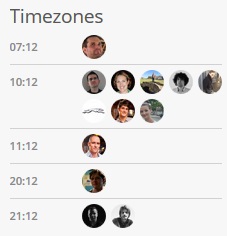
In my day-to-day work at Human Made, I’ll be working on both client work as well as products, such as happytables. In fact, I’ve already begun shipping code, and had my first deploy last week (along with my first broken deploy, and my first scramble-to-fix-the-fatal-errors). I also shipped a cool little timezone widget that shows exactly what time of day it is for the humans that compose Human Made:
I’m looking forward to seeing where this change takes me. If the first week is any indication, I definitely made the right choice.